



HomeAbouteTopaz.comNews & Events

Wednesday, December 8, 2010

Fitness For A Cure

Fitness For A Cure 2010

Photos by Emilie Inc
St. Jude Performance Team


Fitness For A Cure Gala


Sherri Sarrouf


During the holiday season I tend to think more about giving back to others than any other part of the year. I also tend to have those less fortunate on my mind. I want to take a minute to let you know about one of the best events for giving back; Fitness For A Cure.

Fitness For A Cure is an event started by the owner of SLS Fitness, Sherri Sarrouf. Sherri hosts this event to raise money for St. Jude Children’s Hospital. For those of you who are not familiar with St. Jude’s it is a hospital known all over the world for finding cures and helping to save children with cancer and other horrible illnesses. If a child gets sick the child’s family can bring them to St. Jude’s where all costs not covered by insurance will be taken care of. As you will read about on the Fitness For A Cure website, “In 2010, St. Jude was ranked the most trusted charity in the nation in a public survey conducted by Harris Interactive, a highly respected international polling and research firm. St. Jude was also named the nation's top children's cancer hospital in the 2010-11, "Best Children's Hospitals", rankings published by U.S. News & World.”
The Fitness For a Cure gala raises money for St. Jude’s, but most importantly will change you as an individual. I attended the event for the first time last year. I had heard numerous great things about it, but wasn’t sure what to expect. Needless to say, I walked out of the event a changed person. My perspective about how lucky I am to be healthy, the stunningly sad realization of what it must be like to have a sick child, the inspirational attitude of the children who are extremely ill at St. Jude’s, How much of an influence people can have on a great organization if they all work together. So many things were brought to my attention I had never thought about before. The event included performances by the St. Jude performance team, a family who had lost a child to cancer, BC football player and cancer survivor Mark Herzlich, and a special performance at the end by the lead singer of the once popular band, Lonestar.

Bring your tissues! This year's event is on March 26th, 2011 at the Lowell Memorial Auditorium in Lowell, MA. I urge you to check out the website and learn what Fitness For A Cure and St. Jude’s are all about!

Tuesday, November 30, 2010

"Are Attractive People More Employable"


My friend suggested I blog about this NY Times article,
“Are Attractive People More Employable.”

It is definitely an interesting topic, so here are my thoughts:

“Employer callbacks to attractive men are significantly higher than to men with no picture and to plain-looking men,”
As you know from last post, I am all about transparency. If I was hiring I may just be more inclined to call back the people with pictures than with no pictures at all. I feel like I can make more of a connection with people when I can put a face to a name. Do I think the people with pictures are necessarily going to do the job better? Maybe not, but I think they were smart to try to make more of a connection with the person hiring them. If they seem as qualified as someone without a picture they will probably get the call. (As long as it’s an appropriate picture that is!)

As far as calling back attractive men vs plain-looking men. I feel like the article uses tricky words here. Notice how it does not say “attractive vs. unattractive.” In that case, I don’t think I’d be more likely to call back one VS. the other. However, “plain-looking” is a different story. Did one man send a professional head shot of them while the other sent an off-center picture of themselves in a white t-shirt with stains? Yes, I may be more likely to call back the “attractive man VS. the “plain looking” man. Or is “plain looking” a simple a button up and not a suit jacket? If so, I’d have no preference to which one I called back. The article uses words that can be interpreted in too many different ways here.


“Women with no picture have significantly higher rate of callbacks than attractive or plain-looking women.”


What? This just doesn’t make sense to me! Unless you believe the next line in the article:

“We explore a number of explanations and provide evidence that female jealousy of attractive women in the workplace is a primary reason for the punishment of attractive women.”This explanation can only be true when a woman is doing the call backs…am I right? Otherwise that theory makes no sense.

The article then ends with this contradicting statement: “Previous research, however, has found that good-looking female workers receive higher raises than their plain or ugly counterparts.”Okay, so this directly counteracts what the article previously said about how attractive women get punished in the workplace due to jealousy. Or is that statement true and they get punished in non-monetary ways but rewarded monetarily because men are in charge of a majority of raises in the corporate work place? (is this even true?)

Basically, this article leaves a lot to be desired. Also, how did they come up with these statistics? Especially when people see “attractive and unattractive” in so many different ways. It reminds me of the stat on the new Match.com commercials…”One in five relationships now begin online.” What? How did they get this stat? Did they ask everyone in the world that’s in a relationship where they met? They didn’t ask me, I know that.

So, what is the truth about how someone’s appearance affects their marketability?
This reminds me of a case study I looked at in my Services Marketing class my last year of college. The case was about a man who was applying for a sales position at a company but was very out of shape. We had a long discussion in class about what role that factor should’ve played in this man’s marketability. In the end the general consensus in the class was that the man’s appearance (weight) did greatly affect his marketability. He seemed to have trouble walking up and down stairs, traveling, carrying luggage, etc. If someone just as qualified had applied for the job they should get it over him.

So, in the end, my opinion is that there are some factors of appearance that can definitely affect your marketability, even in the corporate work environment. While you may not be trying to join a professional sports team you are still trying to obtain a job that at some point or another involves your health. Just showing up for work is directly related to your health, never mind the travel you may have to do, the presentations you may have to give, etc. If it was up to me gender or a big nose wouldn’t make anyone less hirable (well, except maybe a model...) but shortness of breath and panting during an interview might!

Tuesday, November 23, 2010

Building Successful Relationships

This is a heavy topic, no matter which way you look at it. The relationships we create with people throughout our lives is one of the most important things we do, and also one of the toughest. These relationships create our best friends, our spouses, and often are what keep our businesses afloat. The opposite it also true: they can end up our biggest enemies, in divorce, or can be the reason people go out of business.
No matter which way you look at it; relationships are extremely valuable. What we choose to make of these relationships is up to us. Yes, of course, there are times things happen we can’t control, but often times we have the chance to make our relationships thrive.
In the travel industry relationships are extremely important. It seems like everyone knows someone who knows someone else. When people are together (as I learned at my first NBTA) they like to chat, have fun, and network. I am always trying to keep this thought at the forefront of my mind as I do my job on a daily basis.
I come from a family where loyalty is everything. My parents always taught me to put family first, and that if anyone I ever cared about needed anything to be the first one there. They taught me it’s important to appreciate those who appreciate us and at the end of the day, the important people will be there. My parents talked about relationships a lot. They spoke about their relationship with each other, our relationship with them, and their relationships with their employees. (They owned a restaurant)
Growing up talking about relationships with my parents and now taking some of my own experiences from the business world I think there are a list of important aspects that lead to developing successful relationship, from friends, to spouses, to clients. At the end of the day, I think these are some of the most important:

1.Communication: Once this slows or stops, everything else seems to fall apart and ceases to exist pretty quickly. Even the biggest mistakes or most confusing situations can sometimes be fixed by honest, open communication. Don’t forget to stay in touch with the people you care about. Don’t be afraid to shoot an e-mail or phone call off to an old client you haven’t talked to in a while. Is something really bothering you? Weighing on you? Say it. I promise, you’ll feel better!

2.Honesty: Lying gets you nowhere except into a relationship with bigger problems. Be open and straight forward. Don’t try to hide things. The more honest you are with someone, the more honest they will be with you. Besides, who wants any relationship they are in to be based off of lies?

3.Loyalty: If someone treats you well, remain loyal to them. If they need you, be there for them. If someone else wants to talk about the person behind their back, stay silent. Maybe even walk away or disagree.

4.Appreciation: Let those you care about and feel lucky to have in your life know it. Show them you appreciate them through words and actions. Don’t take people you care about for granted.

5.Transparency: Let’s face it, nobody likes to feel like they have to dig for clues about how you feel or what you’re doing. This is especially true in business….don’t give anyone a reason to doubt you.

6.Respect: Never act too good for anyone. You’re not. As they say: You gain respect by earning it, but also by GIVING it.

7.Intuition: This may seem like the odd ball out, but I think it’s really important. We all have it, somewhere within us. That feeling above all us that inspires us to make certain decisions. I think this feeling is so important in building successful relationships because every relationship we have is going to be different. No one is the same. You have to have an intuition which helps you decide how to appropriately deal with each individual relationship. You know what makes that person tick, you know their insecurities, personality, strengths….so take the time to think about them, follow your intuition and don’t treat any of your relationships the same, because most likely, they’re not.

I’m sure there are many other things people find important in developing and maintaining valuable relationships. I’d like to hear them. Shoot me an e-mail at jillian.walsh@etopaz.com.


My family at my sister's wedding

Monday, November 15, 2010

Travel Policies and Evaluation


Recently, I posed a question on a LinkedIn group I am part of: ACTE (Association of Corporate Travel Executives)
How often do travel managers evaluate their travel programs and travel agencies? How do they perform this evaluation?

Since I posed the question almost three weeks ago there have been numerous responses. Many people from different sectors of the travel world (travel managers, agents, consultants, suppliers) have given their insight into the question. After reading all of the responses so far it seems there are a couple of common points that people brought up. Here is a summation of the responses:

-Numerous corporations (even large ones) still don’t have travel policies in place.

-Many corporations who have travel policies in place, do not enforce them.

-Vendor contracts are reviewed quarterly or annually, using several different methods.

-People are looking towards technology to help book travel and analyze travel spend/performance

-Real time analysis is the most important analysis a travel manager can perform because it allows for immediate recognized savings.

-Travel programs differ and are enforced very differently depending on companies various cultures.

-Enforced travel policies and analysis of these policies is necessary whether you’re a small or large company.

-Many employees do not understand, are scared of, or abuse travel policy.

All of the analysis people have given has been very insightful. I hope to continue to pose questions that people are interested in discussing. To join the discussion, join the ACTE group or the Topaz International Group on LinkedIn:

ACTE: http://www.linkedin.com/groups?mostPopular=&gid=789767

Topaz: http://www.linkedin.com/groups?mostPopular=&gid=1833037

Wednesday, November 3, 2010

Standing Up After Falling Down


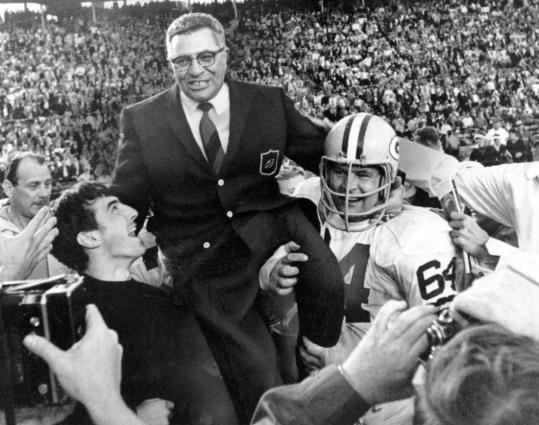
Vince Lombardi said it best, “It’s not whether you get knocked down, it’s whether you get up.” I’ve heard this advice from a few people in my life and always thought this made sense but never truly understood it until I was in a position of truly falling down and standing up again didn’t seem so easy. The truth is, looking back on it now I see numerous times I have fallen down and have had the choice to sit down or stand up. Most of those times I kept my head held high and stood back up right away. A few of those times it took a little more effort and a little more of a push to stand back up. However, it’s the couple of times when it took time, a true struggle, and a strong push to stand back up that have made me who I am today.
Bad times teach us something. Even when we don’t feel like we’re learning anything in the moment (or months), eventually, we realize how much we’ve been taught through the struggle. There’s something to be said about moments when you feel like there is no light at the end of the tunnel. One thing I’ve learned is that there is always a light at the end of the tunnel. It may not be the light you expect at the time and it may not be the brightest burning light, but it’s there. And once you reach that “light” at the end of the tunnel, whatever it is, you’ve got through the hardest part. Now you have the choice to take whatever that light is, small or big, and make it burn brighter, and have it fulfill your life in all the ways you need it to.
I think sometimes we have challenges we face that we never expect and we can’t imagine getting beyond. All our lives in business and life we’re taught that preparation is everything, and without it, you fail. So what do you do when something happens that you were unprepared for? How can you possibly succeed if you weren’t able to prepare?
These are the moments you may feel like a failure, but these are also the moments you have the chance to stand back up, start over, try again. Most of these moments’s preparation wouldn’t have helped you anyways. They are the things you can’t prepare for. The things you can’t wrap your mind around, the things you say, “That will never happen to me.” Well they did, it did, he did, she did………..so, what next?
I think back on all the advice I’ve received and this is honestly one of the best pieces. It happens all the time to people in all areas of life. It is the difference between being unhappy, scared, depressed, and/or stressed forever, or pushing forward onto the life you want to live with the success, love, happiness, fulfillment you want. So next time you fall down, feel free to allow yourself to feel the struggle, take the time in stride, and know that there is a light at the end of the tunnel if you can just keep walking through it.

Thursday, October 28, 2010

Topaz is Celebrating Higher Education!


Topaz International is Celebrating Higher Education!
Research? Student recruitment? Study abroad? Student Competitions? Conferences? Spring break trips?

Topaz International is celebrating our colleges and universities around the world for inspiring the growth of our future leaders! Recently, many colleges and universities have been utilizing Topaz services to help them save money on travel so they can bring the impact of their educational programs across the globe. We’d like to help you make a greater impact. All colleges or universities who audit in the months January, February or March will receive 10% off their total audit price!-------------------------------------------------------------------------------------
Personally, I’m very excited about us helping colleges and universities save money on their travel. Looking back on my college career my most memorable and life changing experience was when I went abroad to Italy for a semester. It was such a great opportunity to spend time outside of my comfort zone in a new culture learning a new language. I also know that many of my friends feel the same way. I’ve yet to hear someone have a negative experience that went abroad. I also had friends during college who went to Ghana, Africa to help teach entrepreneurship to children. They also told me how life changing their experience was.

I always think it’s a neat thing when institutions of higher learning all over the world can collaborate and travel to each other to share ideas and cultures. I think sharing knowledge is one of the most important things we can do as a society. I’m proud to help support an initiative that tries to make this easier for everyone involved. I look forward to working with many institutions of higher learning in the upcoming months!

PS: The picture above I felt was appropriate for this post. This is a bar in the middle of Florence, Italy that had US college shirts all over the ceiling and walls. Kids who have come there from all over have got to hang their shirts. :)

Friday, October 22, 2010

10 Great Reasons to Audit in January


There is a similar pattern I’ve noticed as I’ve been working with clients in the early stages of their audit process. Many of them come to Topaz with a desire to audit but have many questions about the process. Once we have had a few phone calls with a client and they are comfortable with the process they usually talk it over with their team and then decide to audit. One thing that has always surprised me is that often times after our clients decide they want to audit they choose a random month to do so. They may start right away because the audit was motivated by mistakes they feel their agency is making, or it may be a time when employees have complained they can find lower fares on the internet. Or sometimes it’s a month when they have a lot of their employees traveling.
However, sometimes I think there are certain months to audit in the year that are better than others and these times fly below the radar. One of these months is January. Most clients will assume January is actually a poor time to audit because it is one of their slowest travel months. However, if you look closely there are at least ten great reasons to audit in January:

1. Let your agency know you are serious about their performance and developing a relationship with them from the beginning of the year.
2. Utilize benchmarking reports included in your audit to set a baseline for 2011
3. Renegotiate contracts early in the year if you are seeing problems
4. Address specific employees or agents early on who are not following policy or making errors
5. Quiet the noise of your employees stating they can find lower fares at the beginning of the first quarter.
6. Ensure you don’t run out of money in your budget to audit by the end of year.
7. Compare 2011 data to 2010 data right away to see how changes in your travel program, management, etc. have developed.
8. Review your agencies performance during a month where there are fewer bookings and errors are possibly more likely to occur.
9. Ensure a peace of mind of your agency’s performance and collect data to show management later in the year if issues arise.
10. Take part in a responsible business practice half of the fortune 1000 companies are also a part of!

So if you are considering an audit for next year and haven’t decided when would be the best time, consider January.